
August 2026 Sebastian Phoenix Rania Ochoa-Yaser Farez Parmar
Congratulations to our three undergraduate research assistants for representing Adapt Lab at SURS 2026!
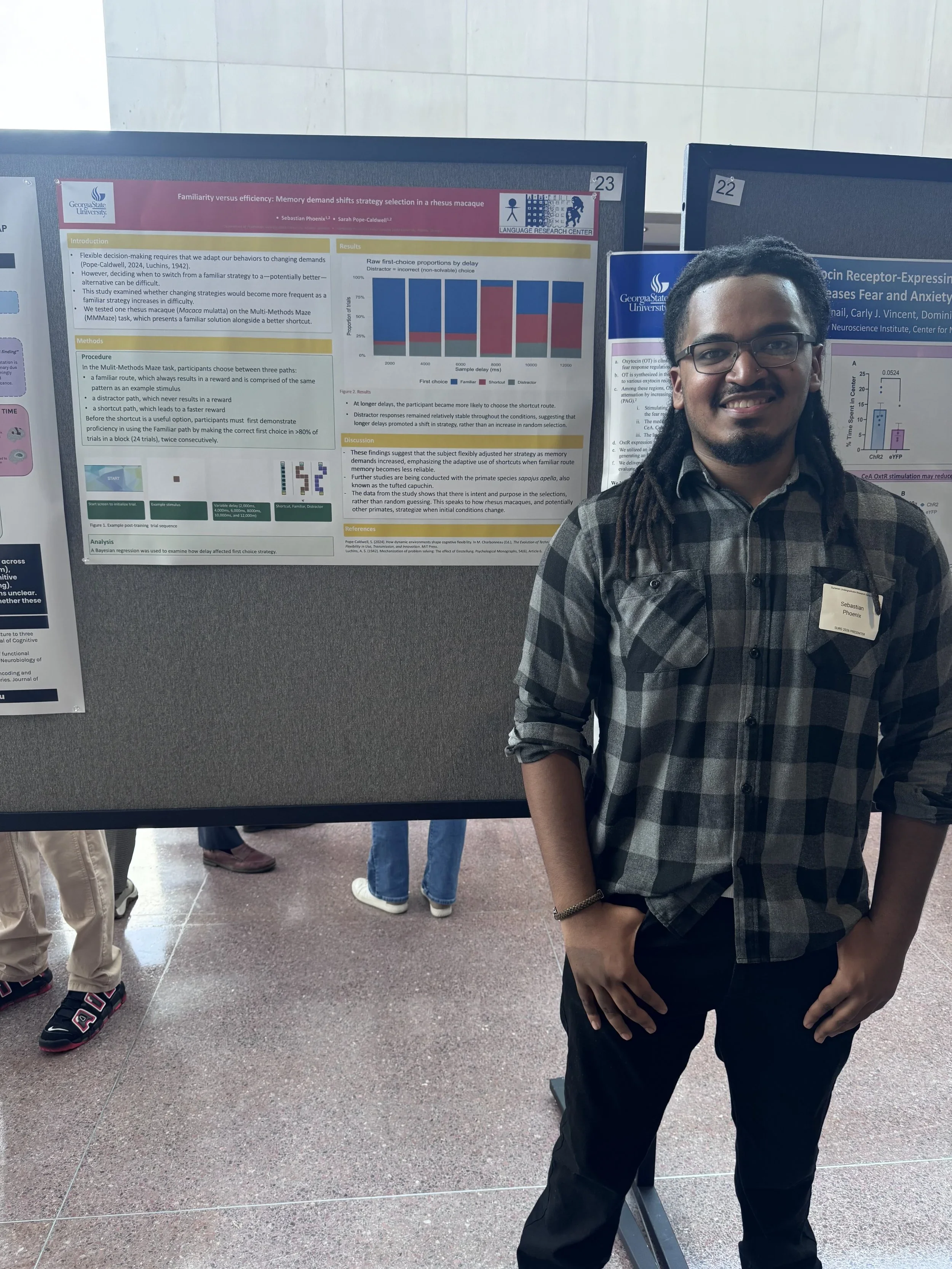
Sebastian Phoenix’s poster focused on “Familiarity versus Efficiency: memory demand shifts strategy selection in Rhesus Macaques”. this study tested whether a Rhesus Macaque would stick with a familiar, reliable route, or switch to a faster shortcut in the Multi-Methods Maze task. As delay grew longer and memory demands increased, the Rhesus Macaque’s first choice strategy shifted, showing how cognitive load shapes flexible decision-making.
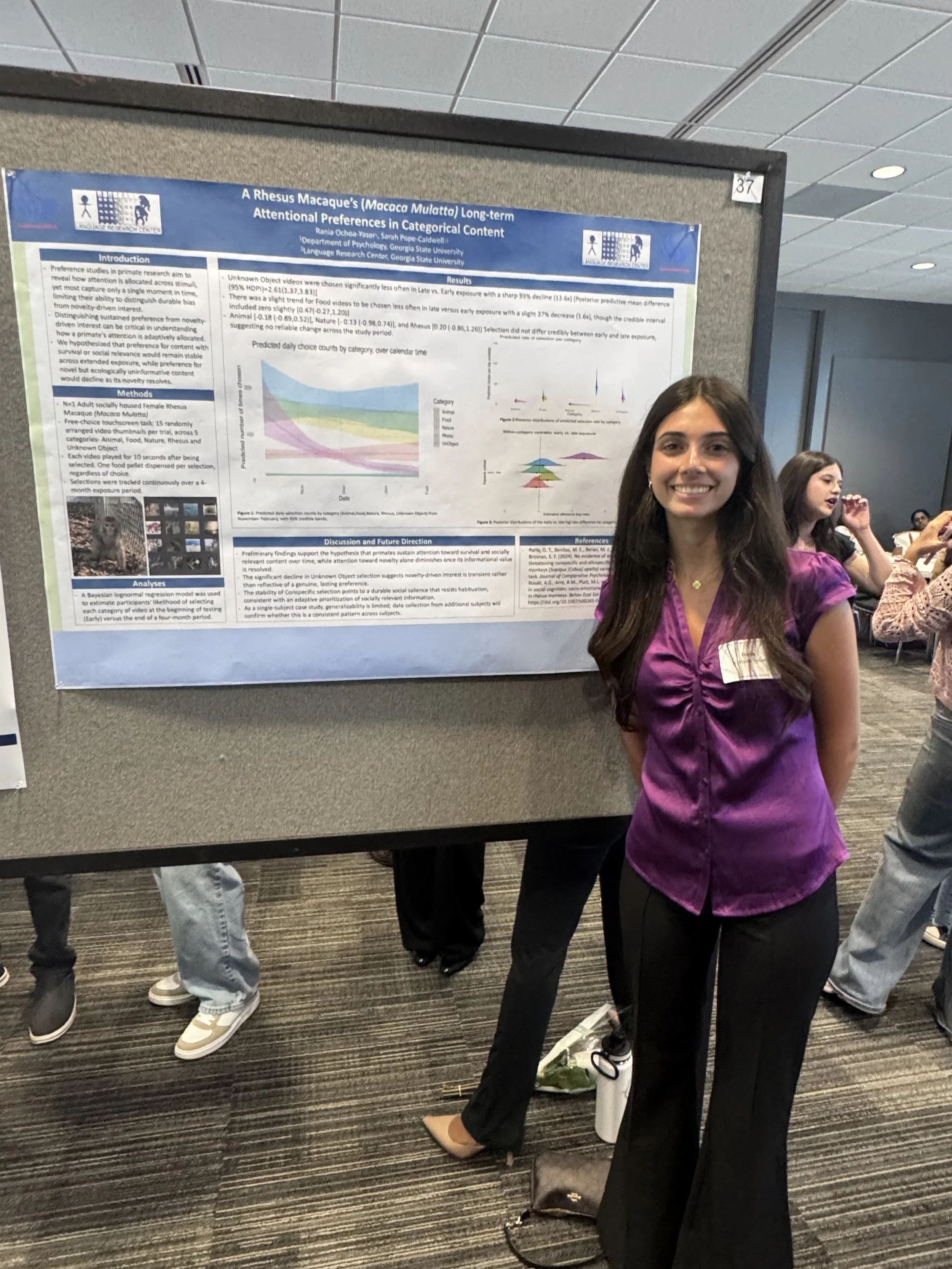
Rania Ochoa-Yaser’s poster examined a Rhesus Macaque’s long-term attentional preferences across categories of video content over four months to separate lasting preferences from novelty-driven interest. Selection of novel-object content dropped sharply over time, while choices of other categories, including conspecifics content remained stable, suggesting that sustained attention to categories such as conspecifics may reflect attentional biases shaped by survival and/or social functioning.
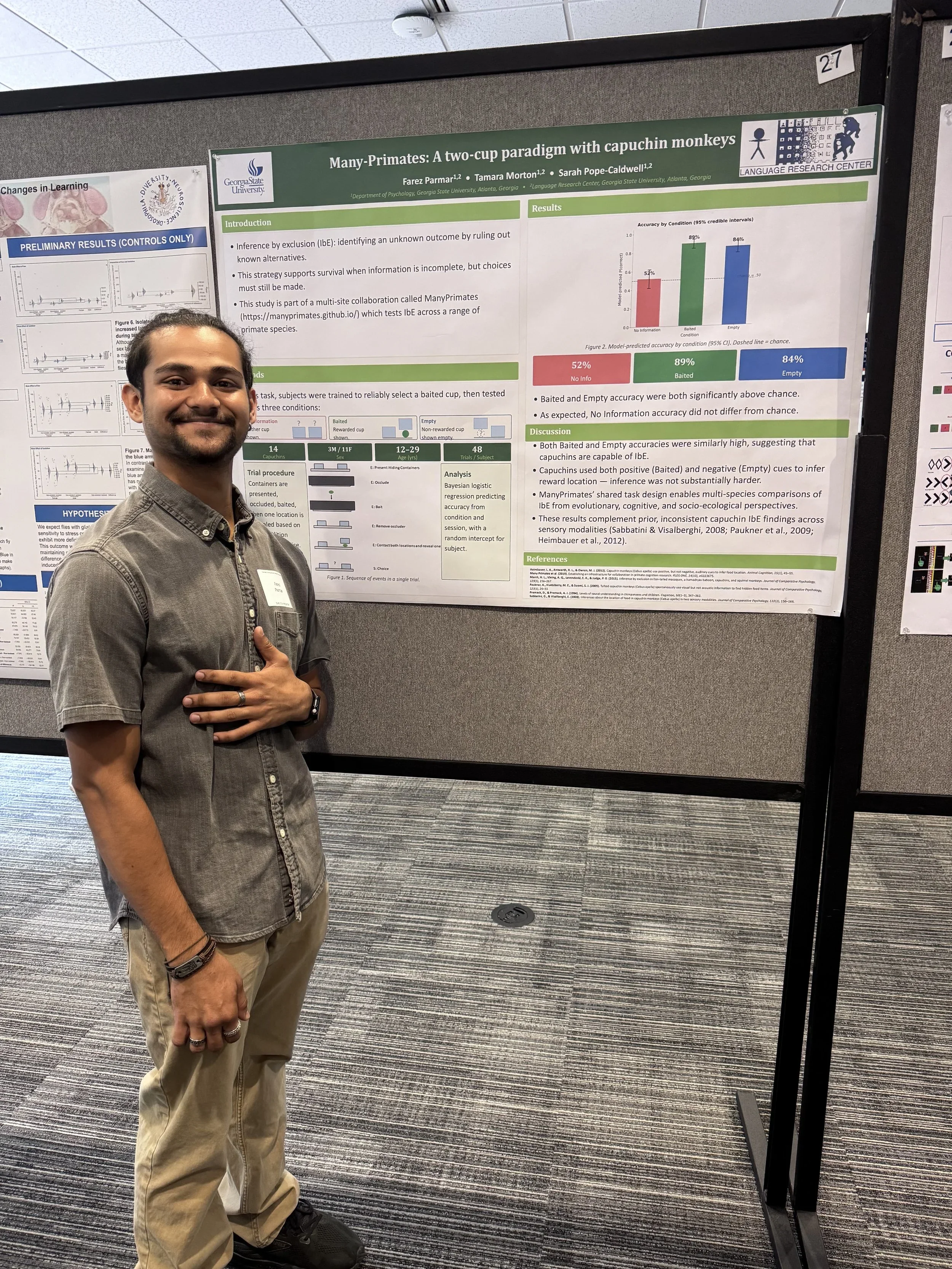
As part of the ManyPrimates multi-site collaboration, Farez Parmar’s poster '“Many-Primates: A Two-Cup Paradigm with Capuchin Monkeys” tested whether 14 tufted capuchin monkeys could find hidden food using inference by exclusion, ruling out known options to identify an unknown one. when shown either the baited cup, or the empty cup, the Capuchins reliably chose correctly, providing data that suggests that Capuchins can use both positive and negative cues to find a reward.
